
Software / Activation
| Storage Type | Zubehör |
|---|
Available immediately
| Storage Type | Zubehör |
|---|
In transit
| Storage Type | Zubehör |
|---|
Available immediately
This category includes software and activation solutions from leading providers such as KOSTAL as well as FEMS apps for intelligent energy control. This product family stands out for its high efficiency, reliable control algorithms, safety functions and modular expandability. Typical applications are private home storage systems and charging stations as well as commercial storage and load management solutions.
High-Performance Software Solutions for PV and Energy Systems
Software and activations optimize yield and self-consumption, enable grid-supportive operating modes, and simplify the integration of PV inverters, storage and charging infrastructure. Benefits include automated load shifting, dynamic tariff control, transparent monitoring, and support for grid services (e.g., feed-in management, reactive power). This helps reduce operating costs, increase system availability and meet regulatory requirements.
Our Software / Activation Energy Management at a Glance
- KOSTAL PLENTICOIN digital Deutschland — Digital activation for remuneration- and coin-based self-consumption optimization on German systems.
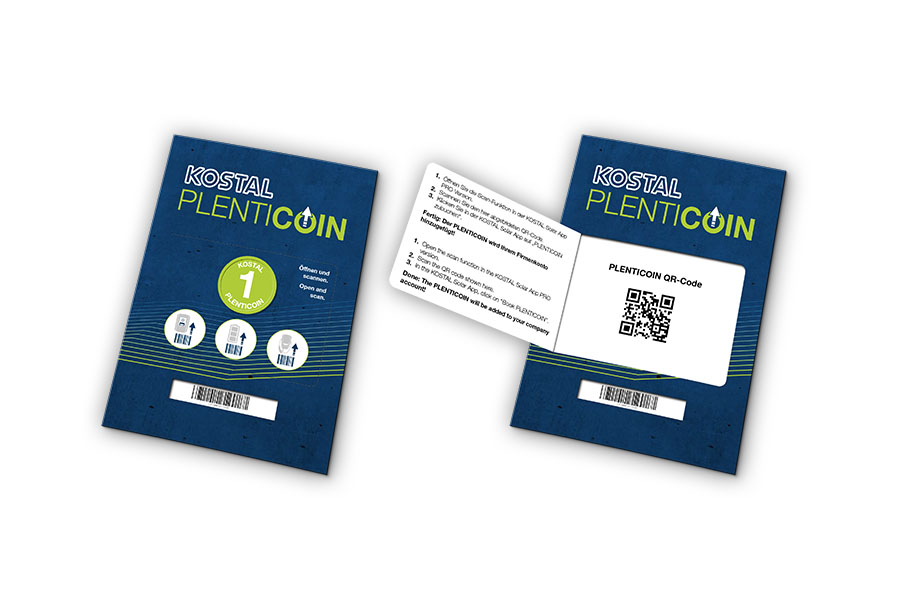
- KOSTAL PLENTICOIN Karte Deutschland — Physical activation card for regions with limited digital access, easy license management.
- FEMS App PV-Wechselrichter — Connectivity and control of inverters for yield maximization and system-level monitoring.
- FEMS App netzdienliche Beladung Heimspeicher — Prioritizes grid-supportive charging profiles for households with storage systems, reducing grid load.
- FEMS App AC-Ladestation — Intelligent charging logic for electric vehicles, load distribution and integration into home energy management.
Technical Features of Software / Activation
These solutions are based on standardized interfaces (API, Modbus/SunSpec), deployable app architectures and cloud- as well as edge-capable components. Safety aspects include encrypted communication, authentication and role-based access. Efficiency is achieved through forecasting algorithms, load optimization and dynamic tariff use. Updates and lifecycle management ensure long operating times; redundant communication paths and certified integrations increase reliability in commercial applications.